


This post contains affiliate links.
In an unpredictable world, being prepared for emergencies is not just a good idea – it’s essential. That’s why I always keep a compact survival kit in my EDC pack, ready to tackle any unexpected situation that may arise. Let’s take a closer look at the key components of my EDC survival kit and why they’re crucial for staying safe and secure. Note: this kit really only focuses on the basics, as I have a dedicated first aid and trauma kit that is more comprehensive.
The Pouch: The foundation of my survival kit is the Remote Equipment Org Kit. With 5 liters of capacity, its thoughtful design includes various compartments – a large mesh pocket for bulky items, two small elastic pockets (with padding for more delicate items), and elastic loops for securing pens, straws, or other small items. The slim zipper pocket on the exterior adds extra convenience and the two grab handles make it easy to retrieve from any top-loading pack. While the kit was designed to attach to the side of the Charlie 25 or Alpha 31 via the daisy chains, it can easily be paired with any pack.

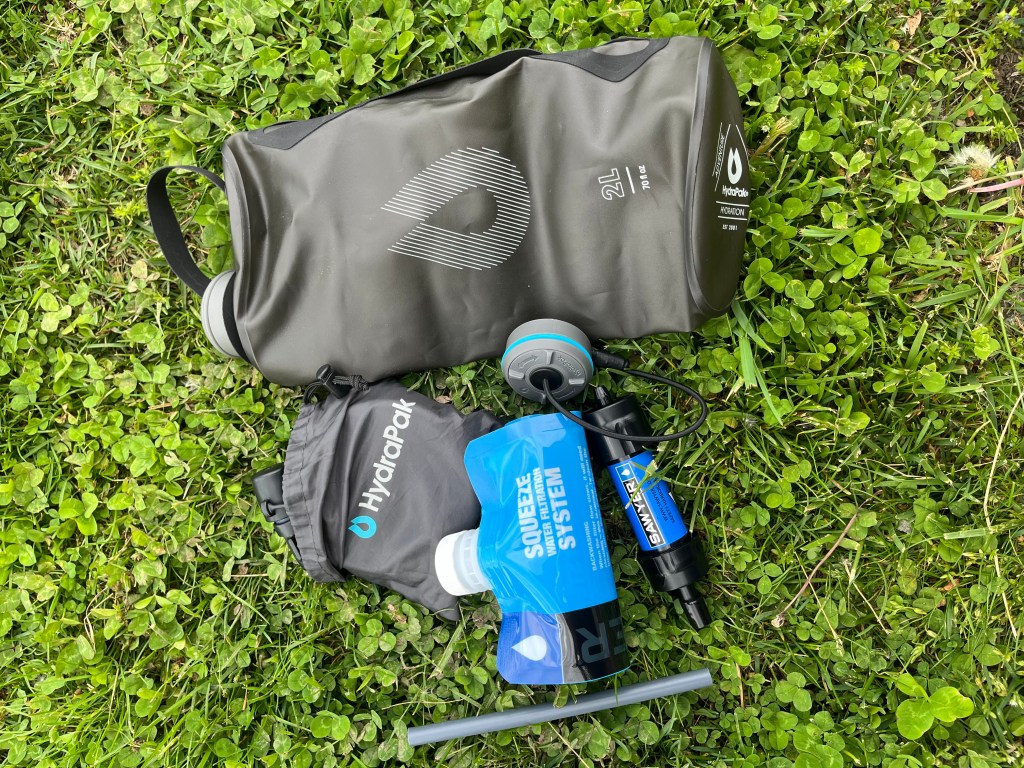
Top Priority = Water: Water is paramount in any survival situation, so I always carry the Sawyer Mini water filter along with a 2-liter Hydrapak Seeker to cover my bases. I also throw in a Plug-n-Play adaptor, which allows for hydration hose attachment, ensuring easy access to clean water on the go. I eventually will consider upgrading to a Hydrapak Filter Cap or Filter Kit in lieu of the Sawyer Mini for added convenience and space-saving benefits.
Food: For sustenance, I carry two Pro Bar meals and Bolt Chews – calorie-dense options that provide energy when needed most. These have been convenient to have on hand during late-night travels or when no other food options are available and of course would come in handy in the event of an emergency situation.
Light Source: For low-light conditions, I include the Petzl Actik Core headlamp with two rechargeable batteries. Its compact size and powerful output make it an essential tool for navigating dark environments.

Navigation and Communication: I include a few basics to aid in navigating and communicating in unfamiliar territory: a compact compass, Vargo emergency whistle, and signal mirror. The compass is included for obvious reasons, but a whistle and mirror can prove helpful to aid in a search and rescue situation should you need to be found.
Protection: For personal protection, the 3M Aura N95 mask offers superior face protection with its flat storage design and secure seal. It’s a must-have for safeguarding against airborne particles and pollutants.
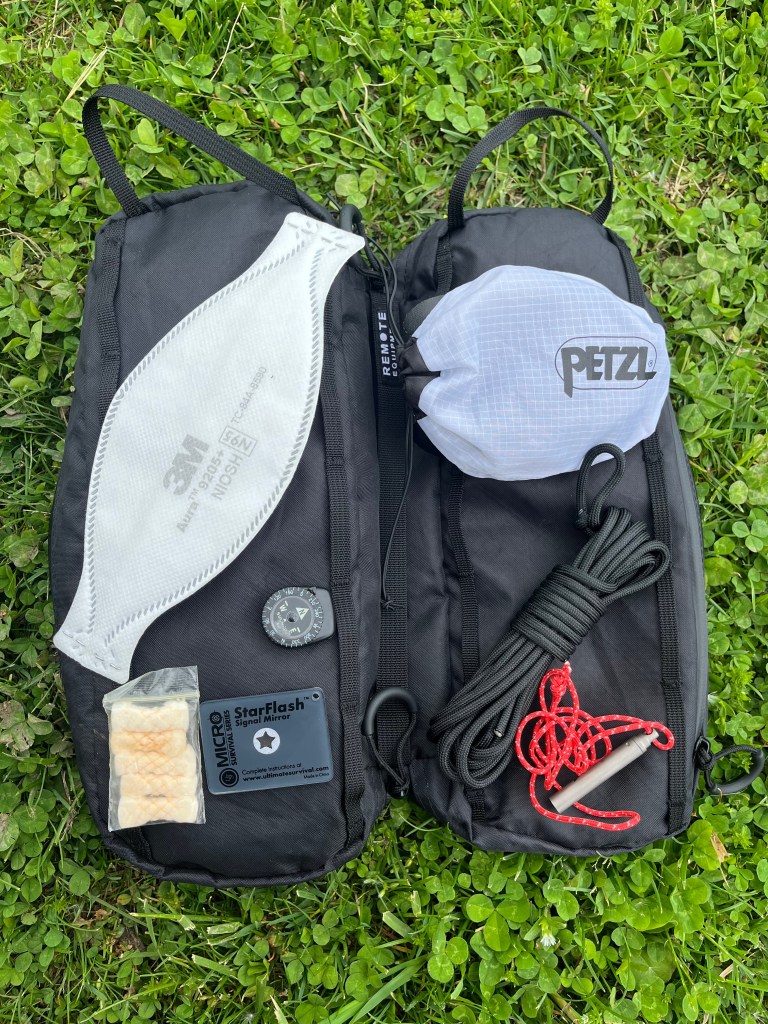
Additional Essentials: There are a few compact but important miscellaneous items that should be considered as part of this kit (hint: adjust accordingly when traveling by plane to account for TSA regulations). I have small bundles of tinder with a mini Bic lighter (or consider replacing with a ferro rod), paracord, a roll of duct tape, and I also include my Leatherman Signal as a multitool, which each offer versatile solutions for various emergency scenarios. These multipurpose items can be invaluable for shelter-building, repairs, and fire-starting.
Future Additions: Looking ahead, I plan to include a SOL Emergency Bivy to further enhance my survival kit’s capabilities. Its lightweight and compact design make it an ideal addition for providing shelter and warmth in unexpected situations.
Bonus Tip: Cash Reserves While not currently included in my survival kit, I highly recommend carrying extra cash – around $100 in small denominations – in your EDC pack. Cash can be invaluable in situations where electronic payments are unavailable or in emergencies requiring immediate assistance.
In conclusion, building a well-rounded survival kit is essential for anyone venturing into the great outdoors or navigating urban environments. You’ll be better equipped to handle whatever challenges come your way. Stay prepared, stay safe!